27 April 1885 — 17 July 1966
Albert Edwin
Freethy
Neath, Wales · Referee · Teacher · Sportsman
He refereed the last Olympic rugby final. He sent off the first man in international rugby history. He coached a team that went four years without losing. History almost forgot him.
Llangyfelach → Neath → The world
I. The Man
A schoolmaster from Neath who bent the arc of rugby history
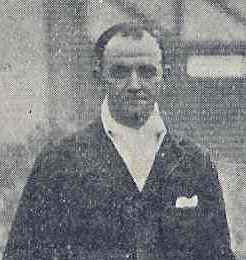
Albert Edwin Freethy was born on 27 April 1885 in Llangyfelach, a village on the western edge of Swansea, into the Freethy family of South Wales and Cornwall. He grew up in the industrial heartland of Glamorgan, became a schoolmaster — first at Alderman Davies School, then at Cwrt Sart School in Neath — and spent his entire adult life in the Neath area, dying in Cimla, Neath, on 17 July 1966, aged 81.
He played rugby as a full-back, but injury ended that career early. He turned instead to refereeing — and in doing so, became one of the most consequential officials in the history of the game. He served on both the Neath and Welsh Rugby Union committees for several years and was described by those who knew him as "a noted disciplinarian" and a man of "moral strength and courage."
He never married. The census records — 1911, 1939 — record him simply: single, Neath. He gave his life to his school, his game, and the boys he coached.
In November 1920, he became the first Welshman ever invited to referee a club match in England — Blackheath v Cardiff. The game crossed the border to find him. Within four years, the world would too.
II. Paris 1924
The last Olympic final
Rugby union appeared at the 1924 Paris Olympics as a full-medal sport for the final time. It would not return — in any form — until rugby sevens debuted at Rio 2016. The man they chose to referee the final was Albert Edwin Freethy of Neath.
USA 17–3 France — Stade Olympique, Colombes. Attendance: ~40,000.
France were 20-to-1 favourites. The Americans were amateurs — students and club players — facing the host nation in a cauldron of partisan expectation. Freethy's appointment came only after two days of dispute over who should take charge. As a neutral Welshman, he was the compromise the nations could accept.
The USA scored five tries and converted one. France managed a single try. The result was a stunning upset — and the crowd did not take it quietly. French fans threw bottles and rocks onto the field and at American players and officials. Wild brawls broke out in the stands. The American national anthem was drowned out by booing. The US team had to be escorted to their locker room under police protection.
Freethy presided over all of it — calm, authoritative, the one fixed point in a match that threatened to become a diplomatic incident.
Rugby union was never invited back to the Olympics after that day. Albert Freethy refereed the last Olympic rugby final in history.
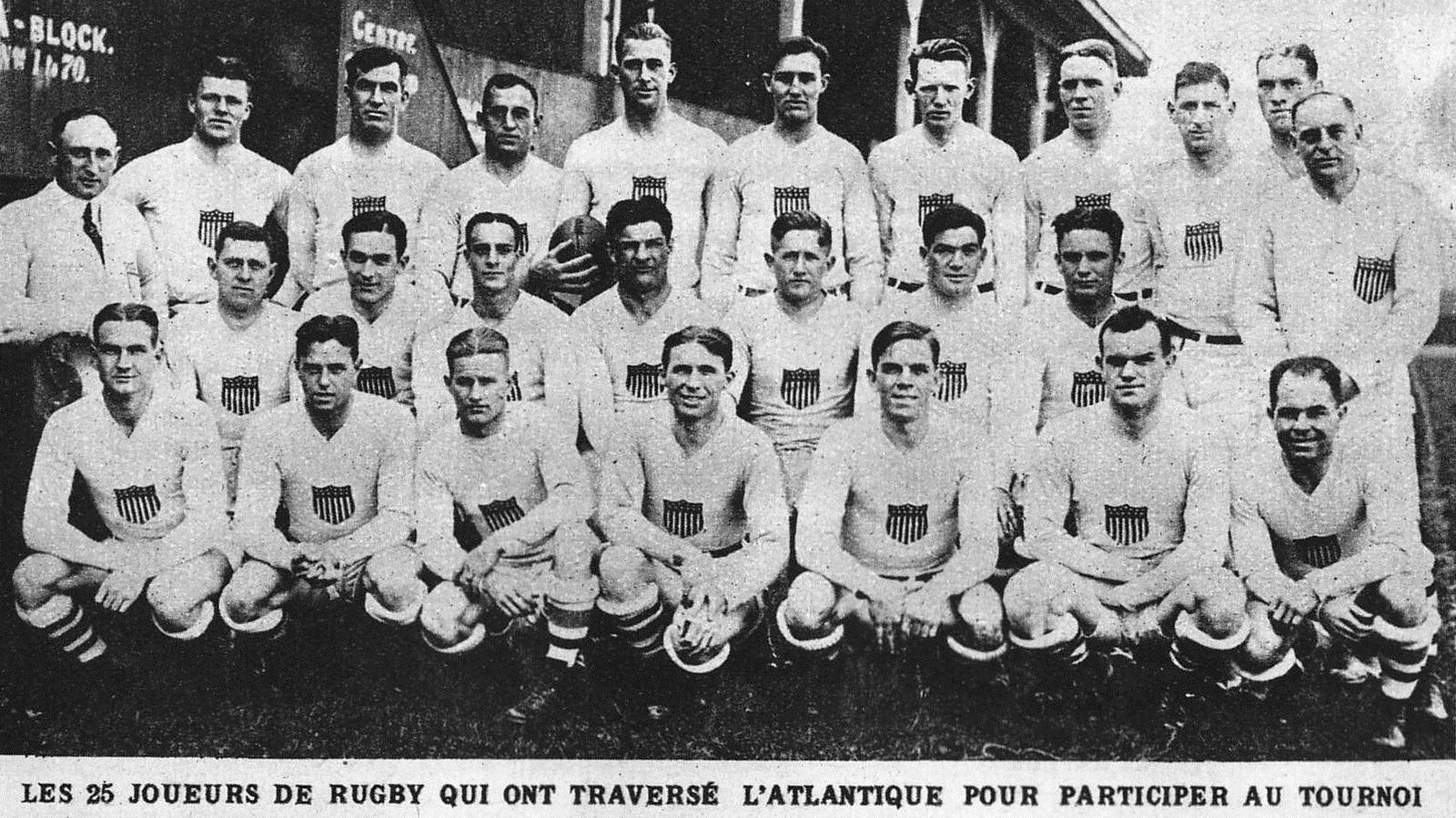
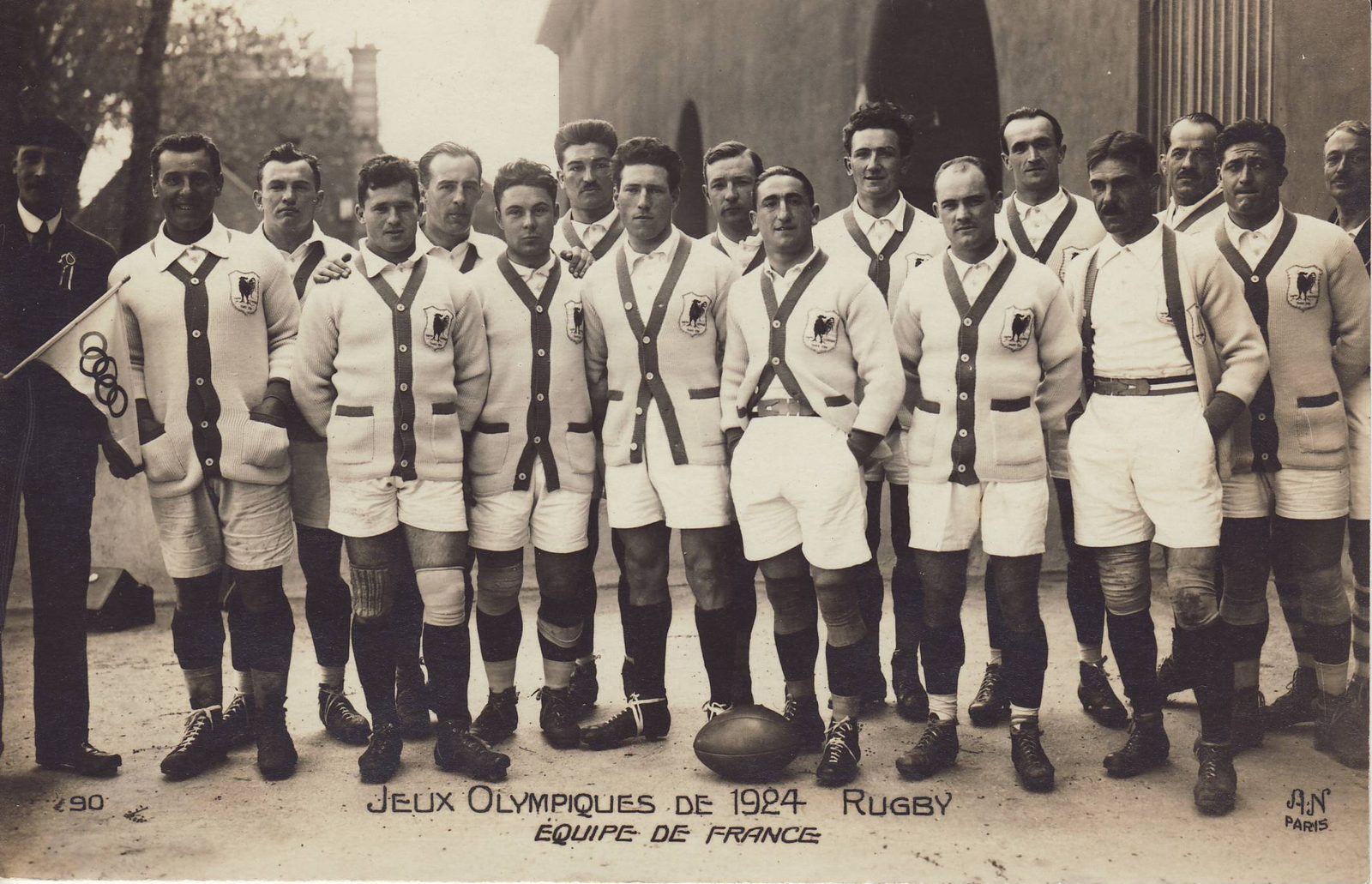
Historic film — USA Rugby · Paris 1924

Later that year he refereed Ireland v New Zealand in Dublin, on the All Blacks' Invincibles tour. His reputation was already international. The Olympic final confirmed it.
III. Twickenham, 3 January 1925
The first sending-off in international rugby
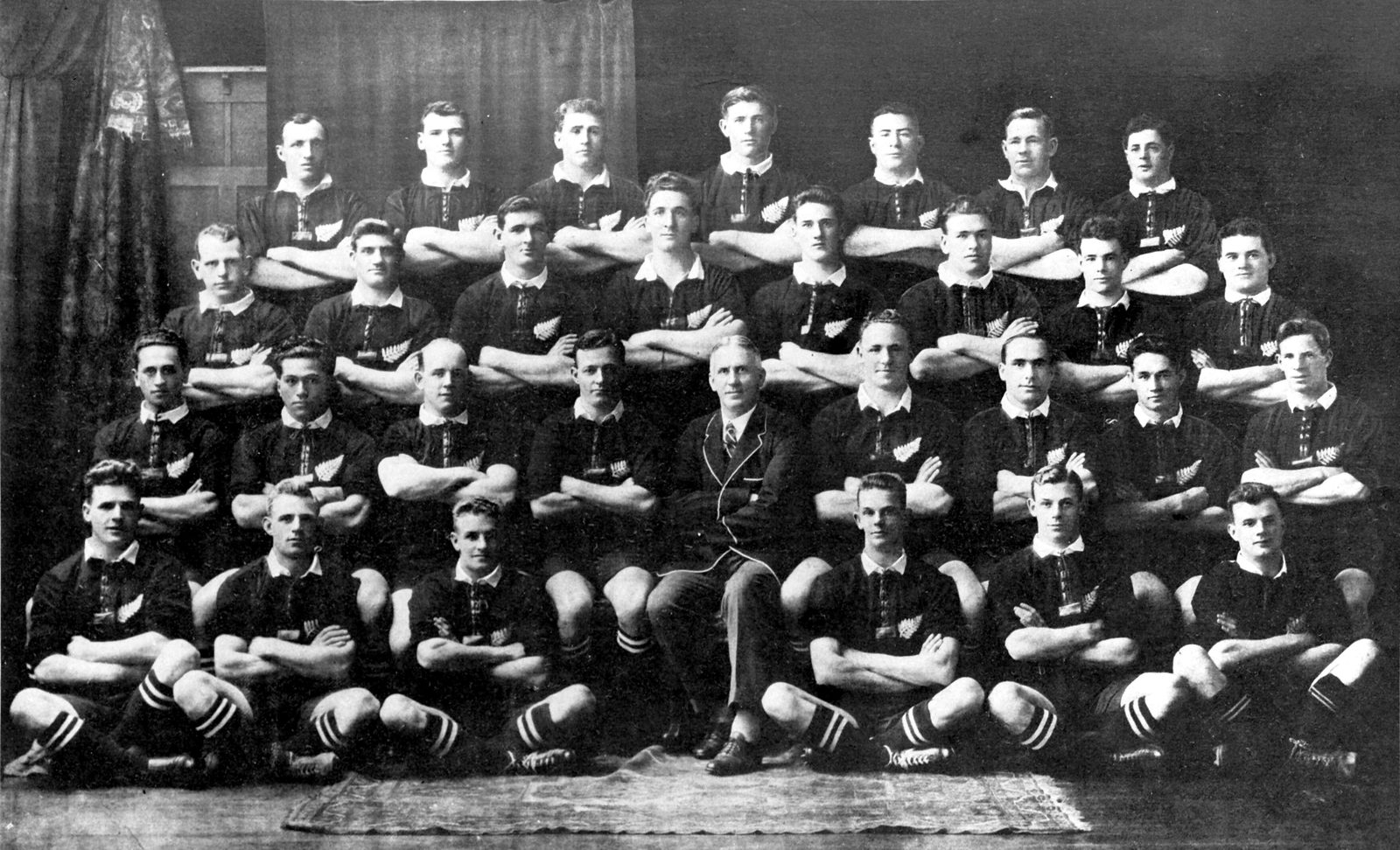
The 1924–25 New Zealand Invincibles were the most dominant touring side in rugby history. They played 32 matches on their tour of Britain, Ireland, and France. They lost only one — to Wales. They were unbeaten in 28 games when they arrived at Twickenham on 3 January 1925 to face England.
Albert Freethy was appointed referee. The Prince of Wales was in the stands. So was the Prime Minister, Stanley Baldwin.
Both teams played aggressively from the opening whistle. Within the first eight minutes, Freethy issued three separate warnings to both sides. Then All Black forward Cyril Brownlie stamped on English forward Reg Edwards, who was lying face down on the ground.
Freethy walked over. He ordered Brownlie off.
No player had ever been sent off in an international rugby match. Not once in the 54-year history of the international game. Freethy did it first.
The All Blacks played on with 14 men. New Zealand still won, 17–11. Brownlie, distraught, reportedly wept in the dressing room.
Freethy's statement afterwards was precise: he had ordered the player off for "deliberately kicking on the leg an English forward, who was lying face downwards on the ground — therefore he was obliged to act drastically."
Post-match controversy was immediate. Some argued that an English forward deserved the same sanction. Freethy stood by his decision. He always did.


The whistle Freethy used at Colombes — and again at Twickenham — was not just any referee's whistle. It was the Evans Whistle, handed down from Welsh referee John Evans, who had blown it in matches against the Springboks in 1906 and the Wallabies in 1908 before passing it to Freethy.
Freethy carried that same whistle onto the field for the 1924 Olympic final, and again on 3 January 1925 when he sent off Brownlie — the first dismissal in international rugby history.
After Freethy's death, the whistle found its way to the New Zealand Rugby Museum, where it is held today. It has since been used ceremonially at Rugby World Cups — a physical thread connecting international rugby's earliest era to the modern game.
The moment reverberated through the game for a century. Freethy's act established the principle that no player — not even on the most celebrated touring side in history, not even before royalty and the Prime Minister — was above the laws of rugby. The red card did not formally exist yet as an object. Freethy invented the act.
His full international refereeing record spanned 1923 to 1931:
| Year | Match | Tournament |
|---|---|---|
| 1923 | France v England | Five Nations |
| 1924 | England v France | Five Nations |
| 1924 | France v USA | Olympic Final, Paris |
| 1924 | Ireland v New Zealand | Invincibles Tour |
| 1925 | England v New Zealand | Invincibles Tour |
| 1925 | Ireland v Scotland | Five Nations |
| 1925 | Scotland v England | Five Nations |
| 1925 | France v England | Five Nations |
| 1926 | England v France | Five Nations |
| 1927 | France v England | Five Nations |
| 1928 | Ireland v England | Five Nations |
| 1928 | England v France | Five Nations |
| 1929 | England v Ireland | Five Nations |
| 1929 | France v England | Five Nations |
| 1930 | Ireland v England | Five Nations |
| 1930 | England v France | Five Nations |
| 1931 | England v Ireland | Five Nations |
| 1931 | France v England | Five Nations |
Historic film — All Blacks Invincibles · 1924–25 Tour
He also refereed six Oxford v Cambridge Varsity matches (1923, 1925, 1927, 1929, 1931, 1932) — and for a period, he held the record as the most-capped international referee in the world.

IV. The Unbeaten Side
Four years without defeat
Away from the international stage, Freethy poured himself into developing young players in Neath. He coached the Neath Ex-Schoolboys XV — a team of boys who had just left school — and guided them through what became a legendary run.
Four invincible seasons between 1922 and 1926. The team remained undefeated until 30 April 1927 — drawing crowds exceeding 4,000 spectators to Cwrt Herbert playing fields. In an era before tactical coaching was commonplace, Freethy was already chalking his team's tactics on a blackboard before matches.
The players who came through his side became renowned throughout South Wales. Several — Trevor Walters, Sam Bates, Griff Bevan, Howie Jones, Arthur Hickman — went on to earn full international caps. His 1922–26 cohort fed directly into Neath's successful 1928–29 season.
The man who enforced the laws without compromise on the international stage gave his weekends to teenagers on a patch of South Wales grass. The same moral seriousness ran through both.
V. Cricket
Glamorgan's inaugural first-class season
Albert Freethy was not only a rugby man. He played cricket as a right-handed batsman and represented Glamorgan County Cricket Club through two distinct phases of his career.
Minor Counties debut: 1908 — seven appearances before the First World War — resumed 1920 — three first-class matches in Glamorgan's inaugural first-class season, 1921
The 1921 season was Glamorgan's first in the County Championship — a historic moment for Welsh cricket. Freethy was among the players who represented the county in that debut campaign. His first-class figures were modest but respectable: three matches, 79 runs, a batting average of 26.33, top score of 31.
He had previously captained the Old Melyn Cricket Club and — according to the Mid Glamorgan Herald & Neath Gazette of 4 July 1908 — was selected to play for Glamorgan against Wiltshire. He served on Glamorgan's committee in the 1930s, long after his playing days were done.
| Format | Matches | Runs | Average | Top Score | Catches |
|---|---|---|---|---|---|
| First-class (Glamorgan, 1921) | 3 | 79 | 26.33 | 31 | 1 |
| Minor Counties (1908–1920) | 7+ | — | — | — | — |
Rugby and cricket: in both games, he left a mark. In neither was he a household name. That is what this site exists to correct.
VI. The Railway Family
Built by sweat, policed by blood
Albert Edwin Freethy did not emerge from nowhere. He grew up in a family steeped in the Victorian railway world — and remarkably, that railway thread runs through both sides of his extended family and on into the present generation.
His father and uncle: Great Western Railway
Albert's father, William James Freethy (born 1849, Vellenoweth, Ludgvan, Cornwall), and his uncle, Albert Edwin Freethy (born 1853, Probus, Cornwall) — the man after whom the rugby referee was named — both appear in the same Great Western Railway staff record at The National Archives: RAIL264, Piece 345. Two brothers, side by side in one ledger.
By 1871 the uncle was living in St Blazey, Cornwall — the GWR's principal locomotive depot for the whole county, at the junction of the Par–Newquay branch. He was seventeen or eighteen years old. He spent his working life on the GWR, eventually dying in Penzance in 1929. His brother William followed the same routes west and then east, the family eventually settling in Llangyfelach and then Neath — following GWR operations into South Wales. When William's son was born in 1885, they named him Albert Edwin. After the railway uncle.
William James Freethy (1849–) — Albert's father. Born Vellenoweth, Ludgvan. GWR staff record confirmed. Moved family from Cornwall to Llangyfelach, Glamorgan.
Albert Edwin Freethy (1853–1929) — Albert's uncle and namesake. Born Probus, Cornwall. GWR St Blazey 1871. Died Penzance. The man Albert was named after.
His brother's father-in-law: Transport Police, Swansea
Albert's brother William Davies Freethy married Agnes Griffiths in Swansea in 1908. Agnes's father was David Griffiths (born 1854, Llannon, Carmarthenshire) — a railway transport police officer, based in Swansea for most of his working life. He died at 50 Iorwerth Street, Manselton, on 8 January 1914.
The men who built the railways on one side; the men who policed them on the other. David Griffiths' granddaughter Beryl May Freethy carried the Freethy name forward, as did her daughter Monya, and the family after her.
The paternal line: Midland Railway, Gloucestershire
Entirely separately — on the Davis side of the family — sits James Drew (born 1837, Horsley, Gloucestershire). His Midland Railway employment is confirmed by RAIL491, Piece 1039 at The National Archives. In the 1861 census he is recorded at Charfield — a station on the Midland Railway's Bristol–Gloucester main line. His daughter Minnie Drew was born on 10 December 1864 at Charfield. She was born, in other words, at the railway station where her father worked.
Minnie married George Henry Davis in 1888 at South Stoneham, Hampshire. Their descendants include the author of this site. The Charfield stationmaster's daughter is in that line of descent, four generations back.
James Drew (1837–1908) — Midland Railway, stationed Charfield 1861. Also Wickwar, Gloucestershire (1871); Southampton area (1891–1901). Died Bedford Place, Southampton, 25 August 1908.
Minnie Drew (born 10 December 1864, Charfield) — her first breath was in a railway station. Married George Henry Davis 1888. An ancestor of the site's author.
Three railway lines. Two sides of a family. GWR in Cornwall and South Wales. Midland Railway in Gloucestershire. Transport Police holding it together in Swansea. Albert Edwin Freethy — schoolmaster, referee, the man who made the first red card — was born into this world. He was named after a railway man. He is remembered by a family still building railways from blueprints and photographs.
VII. Life & Times
A life in brief
VIII. Family
The line that carried his name forward
Albert Edwin Freethy never married and had no children. But his blood ran on through his older brother's line — and it runs still.
Albert's brother, William Davies Freethy (born 1882, also of the Neath area), married and had children. His daughter Beryl May Freethy (born 1909, Swansea) carried the name into the next generation: her parents gave her the Freethy name as a given name when she married, and her own daughter Monya Freethy Garrish (born 1938, Swansea) carried "Freethy" as a middle name in conscious tribute.
That name — passed forward deliberately through the women of the family — reaches to the present day.
└─ brother of
William Davies Freethy (1882–)
└─ father of
Beryl May Freethy (1909–, Swansea)
└─ mother of
Monya Freethy Garrish Davis (1938–, Swansea)
└─ and her descendants, who maintain this site
The family tree in which this page was discovered carries his surname in its title, a small immortality.
Albert Edwin Freethy gave no descendants. He gave something rarer: a record. Every time a player is sent off in international rugby, every time someone asks who first drew that line — the answer begins in Neath, with a schoolmaster who had the moral courage to act drastically.
IX. Sources & Further Reading
Research & attribution
This site draws on the following sources. Photographs credited to rugbyrelics.com remain the property of their owners and are shown with attribution; they are not claimed as part of this site.
- RUGBY RELICS"Albert Freethy of Neath — International Rugby Referee and all-round sportsman" rugbyrelics.com
- WIKIPEDIAAlbert Freethy en.wikipedia.org/wiki/Albert_Freethy
- WIKIPEDIARugby union at the 1924 Summer Olympics en.wikipedia.org/wiki/Rugby_union_at_the_1924_Summer_Olympics
- WIKIPEDIA1924–25 New Zealand rugby union tour (The Invincibles) en.wikipedia.org/wiki/The_Invincibles_(rugby_union)
- WORLD RUGBY MUSEUMRugby at the 1924 Olympic Games: a false dawn worldrugbymuseum.com
- WORLD RUGBY MUSEUM"Sending off is no longer the ultimate disgrace" — worldrugbymuseum.com
- WRUWelsh International Referees Roll of Honour — wru.wales
- GENEALOGYFamily records and research (private)
- CENSUS & CIVIL RECORDSEngland and Wales census records 1891, 1901, 1911, 1939 Register; GRO birth/death registrations — The National Archives, Kew